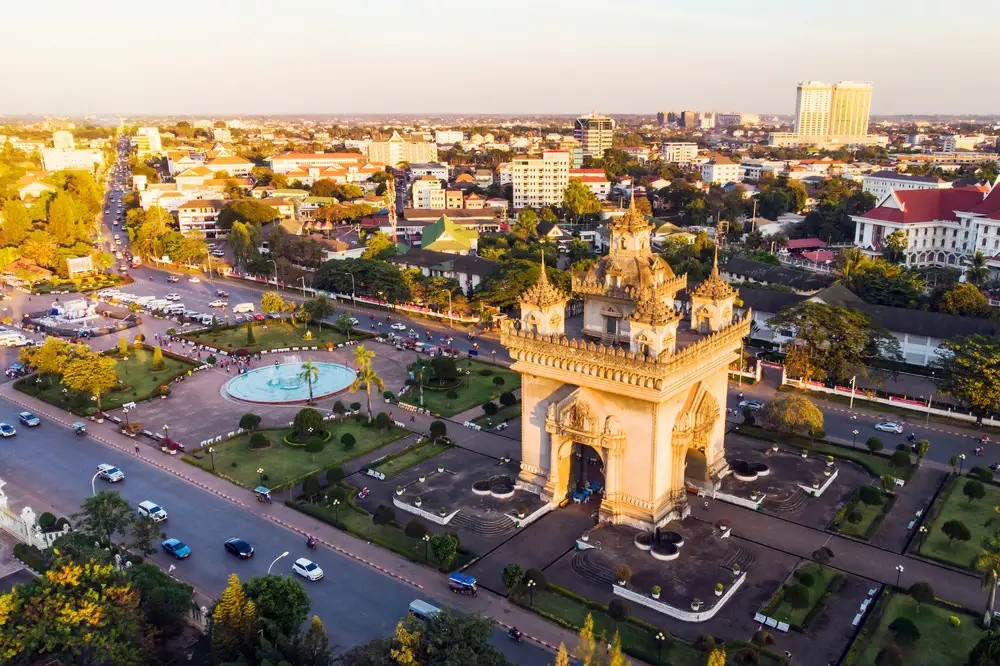
The country of 8 million is still dealing with the impacts of a post-COVID crisis that was marked by high inflation and a collapse in the value of the kip.
Inflation in Laos is on the rise again, due largely to the sharp increase in fuel costs stemming from the war in the Middle East, threatening to push the country back into economic crisis.
According to the latest figures from the Lao Statistics Bureau, headline inflation rose to 9.7 percent in March, up from 6.2 percent in February and 5.1 percent in January, the Laotian Times reported on March 28. As the newspaper notes, the quarterly average has now exceeded the 5 percent annual ceiling that was endorsed at the ruling Lao People’s Revolutionary Party’s 12th National Congress in January.
The most substantial price hikes were seen in the goods and services category, which surged to 39.8 percent in March. The cost of transport and communications rose by 18.1 percent, while housing, water, electricity, and cooking fuel increased by 17.2 percent.
According to the state-run Lao News Agency, “the spike in inflation was largely driven by instability in the Middle East,” which has disrupted shipping through the Strait of Hormuz, a critical chokepoint through which approximately one-fifth of the world’s daily petroleum supply passes. This has resulted in disruptions that “have led to higher energy costs, which in turn have cascaded across multiple sectors of the economy.”
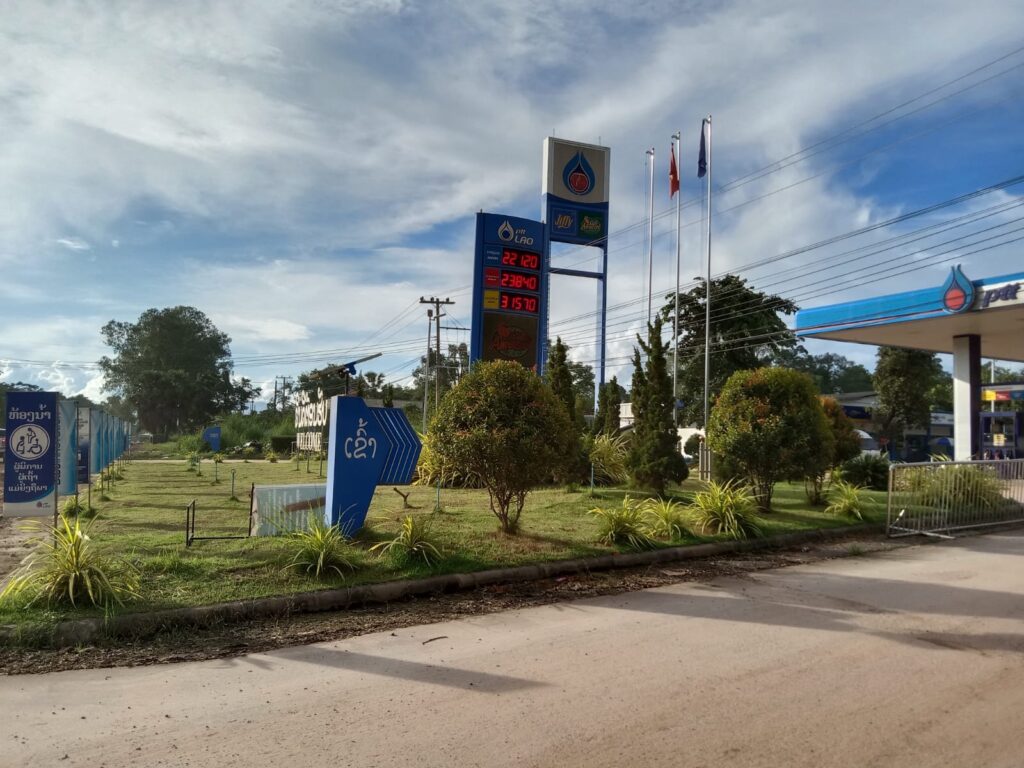
According to the Laotian Times, the price of diesel has more than doubled since the beginning of the war, from 19,970 kip ($0.91) per liter on February 26 to 44,340 kip on March 28. Laos has also experienced widespread fuel shortages, with more than 40 percent of the country’s 2,538 filling stations closed in mid-March, while long queues formed at petrol stations across the capital Vientiane.
Laos does not directly import energy from the Middle East, but is almost totally dependent on neighboring Thailand for its fuel supplies, importing 97 percent of its fuel and diesel from the country. Shortly after the outbreak of the war, Thailand announced it was suspending exports to conserve its own fuel supplies, but it has not applied the ban to Laos and Myanmar. Thailand did ban the export of fuel to Laos during border fighting with Cambodia in mid-December, out of fear that it was being diverted to Cambodia. Coincidentally, this ban was lifted on February 28, the same day that the U.S. and Israel launched their war on Iran.
At the same time, the government has taken several measures to stabilize the fuel supply. It has procured 50 million liters of fuel from close ally Vietnam and 14 million liters of diesel from an undisclosed source. It has announced cuts to fuel excise taxes, reducing gasoline from 25 percent to 15 percent and diesel from 10 percent to 0 percent. The Prime Minister’s Office has also instructed ministries to reduce fuel consumption by rotating staff, increasing remote meetings, and limiting unnecessary travel.
Laos has often been left out of discussions of the possible impacts of the Iran war, but it is among the most vulnerable nations in Asia, due to its heavy dependence on fuel imports and the fragile state of its economy. The country is still dealing with the impacts of a debt-driven economic crisis that was marked by spiraling inflation, a rapid depreciation of the kip, and, for a period in mid-2022, fuel shortages that threatened the country’s food security.
The crisis took hold in early 2022, when Laos’s economy, already severely impacted by the COVID-19 pandemic, was hit by a combination of rising oil prices due to the Russia-Ukraine war, and a sudden depreciation of the kip, which dropped from around 9,000 kip to the U.S. dollar in 2020 to more than 21,000 in 2023. (It currently sits at just shy of 22,000 to the U.S. dollar).
Given that Laos’s growing external debt is denominated in U.S. dollars, this has sharply increased debt servicing costs, pushing the country into a vicious downward spiral. As the country’s debt servicing costs rose from $375 million in 2016 to $1.2 billion in 2020 and $1.7 billion in 2023, state fuel importers essentially ran out of money to import petrol and diesel. This resulted in widespread shortages in both the countryside, where farmers struggled to procure diesel, and in urban areas, which witnessed similar scenes of motorists queuing at petrol stations.
While Laos has since managed to stabilize its economy somewhat, its earlier crisis could offer a foreshadowing of what is in store for Asia if, as seems likely, the war in Iran continues beyond the short term. Indeed, there is good reason to think things will get a lot worse.
https://thediplomat.com/2026/03/the-iran-war-is-threatening-another-economic-crisis-in-laos/