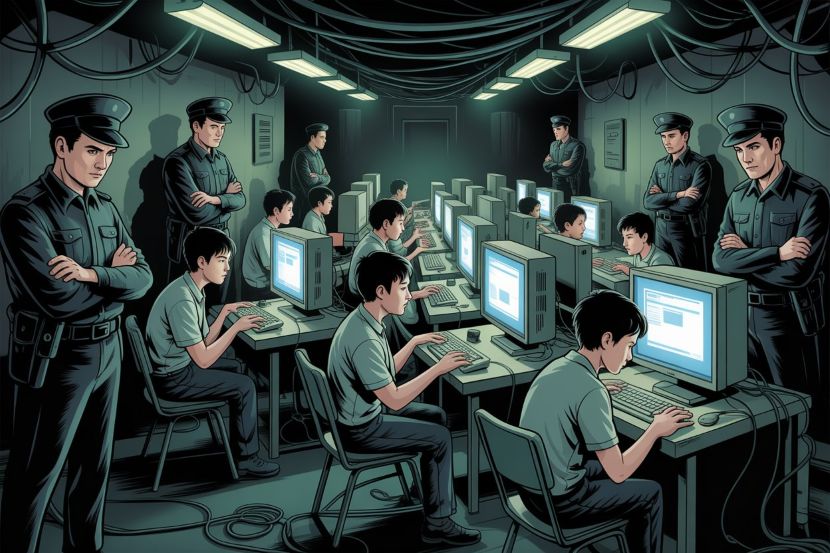
Myanmar joins Cambodia, Laos, the Philippines, and Indonesia in unleashing one of the most dangerous scam empires ever seen in Southeast Asia. These countries, once popular travel destinations, are now entangled in a web of cybercrime, fraud, and human trafficking. From online scams to forced labour, the dark networks have spread across the region, targeting unsuspecting tourists and job seekers. As Myanmar becomes a central hub for these operations, the situation has escalated, with millions of dollars stolen annually. The criminals behind these scams are using deceptive tactics like “pig-butcher” schemes to exploit victims. With weak laws and government complicity, these criminal empires continue to thrive. As a result, travelers must now be more cautious than ever, as Southeast Asia becomes ground zero for one of the world’s largest and most dangerous criminal operations.
The Dark Heart of Southeast Asia’s Criminal Scams
Myanmar’s Scam-Centered Economy: Shwe Kokko & Yatai New City
In Myanmar’s Karen State, a small village has transformed into one of the most infamous scam hubs in Southeast Asia. Shwe Kokko, which now operates under the name Yatai New City, is a fortress-like area run by both local militias and corrupt officials. The city, once home to simple farming communities, has become a lavish resort area featuring casinos, hotels, and a plethora of cyber‑scam centres. Trafficked workers, often foreign nationals, are lured to the area with promises of well-paid jobs, only to be detained and forced into online scams. These victims work long hours, facing beatings if they fail to meet daily targets. Some are even forced into sex work. The militia groups and corrupt officials protect these operations, creating a system of exploitation that benefits from electricity sales and extortion. Even tourists who are lured to the area for its gambling opportunities may unknowingly fund this criminal activity.
Myanmar’s Military-Mafia Ties and the Dark Economy
In Myanmar, the presence of armed groups like the Democratic Karen Benevolent Army (DKBA) has allowed these scam compounds to thrive. The DKBA not only provides security to these centres but also directly profits from the operation of scam hubs. These militias use the revenue generated by scams to fund their activities in the ongoing civil war. The U.S. Treasury has targeted several organizations for their direct involvement with these criminal enterprises. Despite efforts from global law enforcement, very little has been done within Myanmar to shut down these centres. The crisis is so severe that Thailand had to cut power to Yatai New City on two separate occasions in an attempt to disrupt these illegal operations.
Cambodia’s Scam-Ridden Sihanoukville: The Cybercrime Paradise
A Backpacker’s Nightmare: Sihanoukville’s Transformation
Once a thriving backpacker’s haven, Cambodia’s Sihanoukville is now a symbol of cybercrime and human exploitation. The city, home to a growing number of Chinese-built casinos, has become a base for forced labour and cyber fraud operations. Companies like T C Capital and K B Hotel Co. run these scam centres disguised as legitimate businesses. The U.S. sanctions list names several of these companies for their role in facilitating human trafficking and forced labour. Behind the glamour of Sihanoukville’s casinos, trafficked workers are forced to run fraudulent online investment scams, scamming millions of dollars from victims worldwide. Tourists staying at high-end resorts may not realise they are sleeping above scam call centres where human lives are exploited.
Corruption and Criminal Complicity in Cambodia
Cambodia’s elite, including Chinese-Cambodian tycoon Chen Zhi, have been accused of protecting these criminal enterprises. The Prince Group, owned by Zhi, operates several casinos that launder illicit profits and facilitate forced labour. Despite being heavily involved in scams, these operations continue to thrive due to the lack of political will to shut them down. Senior Cambodian officials have been implicated in intimidating victims and shielding operators from prosecution. The Cambodian government only responds to international pressure, and even then, often labels the incidents as “labour disputes” rather than addressing the underlying issues of human trafficking and cyber fraud.
Laos: The Golden Triangle and Its Dark Secrets
Golden Triangle SEZ: Laos’ Criminal Underworld
Laos, a country often overlooked by tourists, is home to one of the most notorious criminal enterprises in the region. The Golden Triangle Special Economic Zone (GTSEZ) has become a hotbed for human trafficking, money laundering, and drug trafficking, primarily run by the Zhao Wei Transnational Criminal Organization. Operating through the Kings Romans Casino, this group exploits trafficked workers, including children, forcing them to engage in a variety of illicit activities. Despite this, Laos continues to promote the GTSEZ as a legitimate tourist destination. The network behind the Kings Romans Casino is also involved in the illegal wildlife trade, further adding to the horror of this crime syndicate.
The Zhao Wei organization, with connections spanning across Laos, China, and Thailand, has turned the GTSEZ into a hub of criminal activity. The casino is known for facilitating large-scale narcotics trafficking and the exploitation of endangered species. While local authorities have seized significant drug shipments, they rarely act against the human trafficking and forced labour operations. Despite its grim reputation, the GTSEZ remains a relatively unregulated zone, with corrupt officials ensuring that the criminal operations continue. Visitors to the area should be aware of the dangerous underworld they might inadvertently support with their money.
Philippines: A Battle Against the POGO Scam
Philippines’ Fight Against Online Gambling Scams
In the Philippines, the government has been battling a surge in criminal activities disguised as legitimate Philippine Offshore Gaming Operators (POGOs). These operations have been linked to money laundering, human trafficking, and cyber fraud. In 2025, President Ferdinand Marcos Jr. issued an executive order banning POGOs, which were found to be facilitating a significant number of scams. Despite the ban, many illegal POGOs continue to operate, often disguised as call centres that scam unsuspecting victims. The U.S. Treasury has sanctioned companies like Funnull Technology Inc., which provides infrastructure for scam websites targeting international victims.
Cybercriminal Networks: The Role of Funnull Technology
Funnull Technology, a Philippines-based company, has played a crucial role in enabling scam operations by providing cloud infrastructure to cybercriminals. The company sells IP addresses to criminals, allowing them to quickly change domains when law enforcement catches up with them. This enables scammers to evade detection and continue defrauding victims. The Philippines government has struggled to fully enforce its ban on POGOs, and many of these fraudulent operations continue to thrive in the shadows.
Indonesia: The Silent Victims of Southeast Asia’s Scams
Indonesians Trafficked Into Scam Centres
While Indonesia does not have large-scale scam compounds, thousands of its citizens have been trafficked to countries like Cambodia and Myanmar to work in these criminal enterprises. Between January and February 2026, the Indonesian embassy in Phnom Penh repatriated over 600 citizens who had been trapped in Cambodian scam centres. Many of these individuals had been lured with promises of well-paying jobs, only to find themselves forced to work in scam call centres. This phenomenon highlights the dangers faced by job-seeking Indonesians in Southeast Asia, where trafficking networks prey on vulnerable individuals.
The U.S. Response: A Global Crackdown on Scam Centers
Sanctions and Strike Forces to Combat Cyber Fraud
In response to the growing threat of scam centres, the United States has launched a series of initiatives to disrupt these criminal operations. The U.S. has imposed sanctions on entities like the Karen National Army, the Zhao Wei organization, and several Cambodian business groups. In February 2026, the U.S. announced the creation of a Scam Center Strike Force, which will coordinate efforts between the FBI, DOJ, and the U.S. Treasury to investigate and prosecute these networks. The task force will use a combination of sanctions, criminal charges, and public education to tackle the scourge of cyber fraud in Southeast Asia.
Breaking: myanmar, cambodia, laos, philippines, and indonesia unleash the most dangerous scam empire in southeast asia!
How Travellers Can Protect Themselves
Stay Informed and Exercise Caution
For tourists and jobseekers in Southeast Asia, it is crucial to stay informed and exercise extreme caution. The rise of scam centres represents a grave threat to both personal safety and financial security. Travellers should avoid offers that seem too good to be true, such as high-paying jobs or “free” vacations. Always research employers thoroughly and steer clear of online investment schemes or romantic overtures from strangers. It’s also important to be aware of common scams, such as illegal gambling, currency theft, and fake job offers, especially in areas like Cambodia, Myanmar, and Laos.
The Urgent Need for Reform
The rise of cyber scams and forced labour operations in Southeast Asia is one of the most alarming criminal trends of 2026. The exploitation of vulnerable individuals, coupled with the complicity of corrupt officials, allows these criminal networks to flourish unchecked. While international sanctions and law enforcement efforts are making some progress, local reforms are crucial for dismantling these syndicates. Travellers must be vigilant and avoid falling into the traps set by these criminal networks. By staying informed and making responsible choices, tourists can help reduce the demand that fuels this dark industry